A Mother’s Love – Part 6
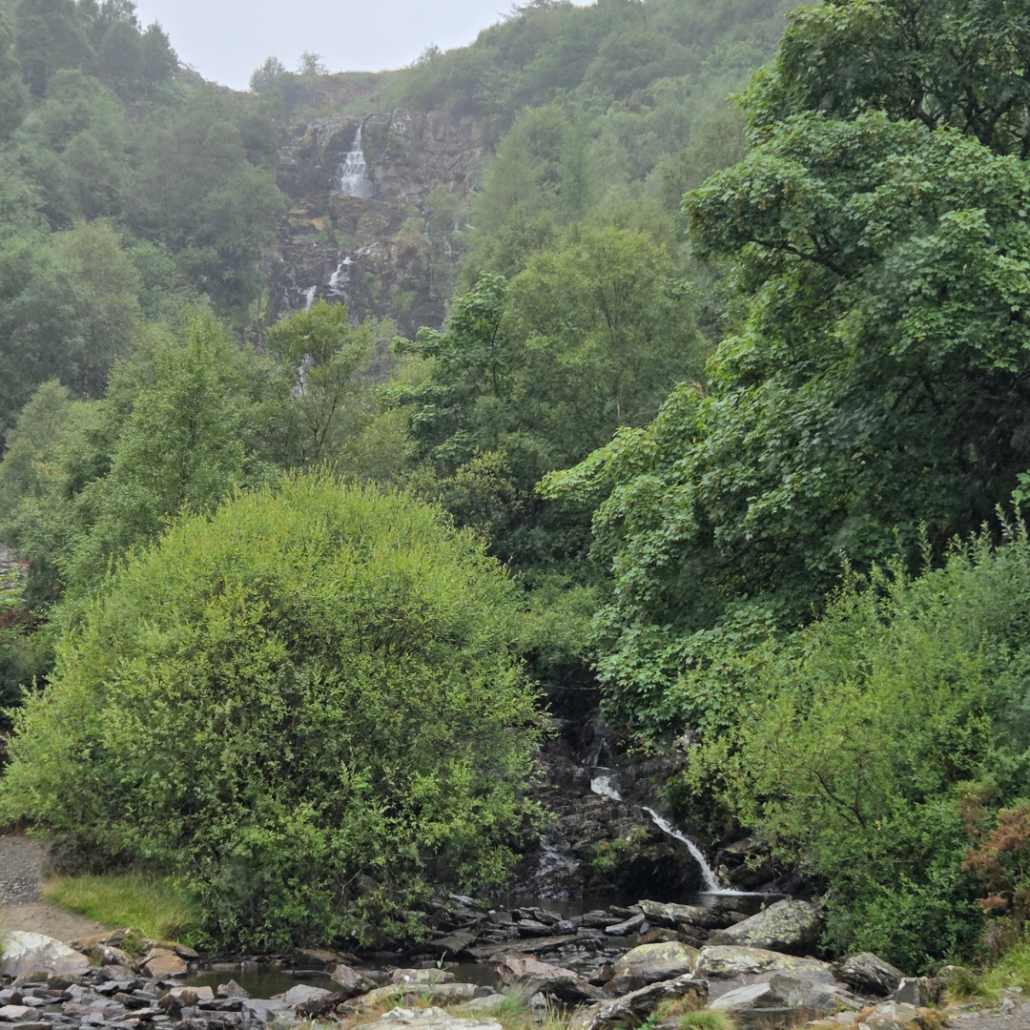
 As I sit here writing this instalment of A Mother’s Love, it’s the height of summer in the UK. That means that lots of my clients are heading off for their annual summer break, and my schedule is a little lighter than usual. So, today I have found myself with a day unexpectedly clear of appointments. Ever one to see the possibilities in a situation, I saw the option of carving out a little time for some soul nourishment. This is actually an upside to some of the trauma stuff for me, at least now I’ve trained myself to move towards positive experiences rather than just defending against negative ones; I can spot something coming and mobilise quickly, which is actually a pretty neat skill both for defending myself, but also for seizing hold of opportunities spontaneously. The weather forecast was good, and so I reached out to a friend to see if she’d be up for a swimventure this morning.
I left the house just after 8:00 am so I would make our 9:30 am rendezvous. We live by the coast, and I could see some wet weather sweeping towards us, and it was starting to rain gently. “Never mind,” I thought, “the location that we are meeting at is over an hour’s drive away, and much further inland, so perhaps it will be different there”.
But, as my journey progressed, I actually seemed to be driving into much worse weather. As my car gained height, heading higher into the mountains, my windscreen wipers had to be made to go faster and faster to cope with the deluge falling from the sky, and the cloud seemed to be getting closer too.
Looking back through the sequence of events this morning, I realise that I hadn’t spotted the tiny hints of nervous system alarm that were ringing in my body at that point. I’m always a little bit on edge when travelling to a new location, as I’m quite directionally challenged and so have to put my full faith in the satnav. I think everyone knows that although this technology is pretty damn amazing, it is not foolproof, so I don’t always get the outcomes I want from my relationship with it. That means that the feeling of slight anxiety is so familiar to me, it didn’t even really register.
Then my satnav skillfully directed me to take the next left turn, and I started to gain even more height. The road got narrower and narrower, to the point where my parking sensors were having a screaming fit because the bracken on either side of the road was too close. The mountainside dropped steeply away to my right, and there was no barrier at the edge of the road. And then I entered the clouds.
“Oh my god, this road is so twisty and turny and I can’t see the road and what if another car comes along? Is my engine behaving differently to usual? I don’t recognise that sound, is my car losing power? I’m going to drive off the edge! What if I breakdown here? I’m not even sure I have phone signal… I might be stuck here forever! I could die on this mountainside! I’m not sure anyone ever drives down here, so my body might not be found for months or even years…” I am habitually accustomed to tuning out from much of my internal monologue, so again, I barely registered that anxiety was whipping up a storm inside me.
Instead, my anticipatory disappointment started to kick in. “We were going to get rained off. We had chosen a location that neither of us was familiar with, a waterfall billed as one of the highest in Wales. Neither of us knows how the water here behaves, and it was very much pouring down, so if we decided to go ahead, we might be risking encountering flash changes in flow, which could be dangerous. My friend was driving a long way to come and meet me for this today, she was going to be so p*ssed off that I had dragged her all this way, just to have to turn around. What would the outcome of this be? Would she still want to be my friend after this? Would she insist we go ahead anyway, despite the dangers? Would we find ourselves getting washed away in a torrent? What would my partner do if I died? He would be so f*cked off when he realised that I had taken a risk and that was the result. Oh, I think I might be feeling anxious!”
It’s at this point, when I consciously registered that my spiralling and really quite histrionic thoughts were all leading me to the conclusion that I would be abandoned, or I would die, or even worse , both, that I had a moment of opportunity to interrupt where this was heading.
This kind of ‘hysterical’ narrative is really quite common amongst survivors of abuse, trauma and emotional neglect, but many people at this point think the best thing to do is to offer up a counter-argument, a kind of “don’t be so daft, that’s not going to happen!” sort of narrative “You don’t need to worry!”
However, having been around the block a few times already with all of this, I did not choose that option. My system knows how unlikely all of those eventualities are, but it also knows that the possibilities exist at the same time, so it would likely call bullsh*t if I opted for this route and it would double down on the doomsaying. Instead, I asked myself the question ” What needs to happen here for this to feel safer?”
I slowed the car to a stop. I took a deep breath in through my nose, paused, breathed in a little more and then let the breath out with a big, audible sigh. Then I did it again. And again. Then I took my hands off the steering wheel, brought my shoulders up to my ears and then let them drop, finishing with a shoulder shimmy to help shake out some of the tension. I unclenched my jaw. I did a couple of minutes of extended exhale breathing and then took the steering wheel in both hands, saying out loud to myself, “Now just drive at the pace that feels safe, go as slow as you like, you can see the edges of the road, and you know your car fits on it, you’re good at steering, just keep going. If you encounter another vehicle, just stop; you will work it out.” I continued to breathe deep and slow.
I made it to my destination just fine and breathed a huge sigh of relief. I was in one piece and had made it there before my friend; my momentary stop had not made me late. I resolved to not travel home along the same route; one hair-raising adventure is plenty enough for one day.
My ‘nervous system regulation strategies’ did not make my route any less anxiety-provoking, and my anxiety level remained high, but I gave my system a signal that told me I could handle this level of provocation and activation and that death and abandonment were not necessarily a foregone conclusion. I brought myself back into my ‘window of tolerance’.
This level of spiralling used to, in days of old, be my pretty permanent state of existence. My system believed that the world was a dangerous place; it would look for evidence of this, and then roll out a protocol to keep me safe. Inevitably, this ended up in fight, flight, freeze, fawn, and flop responses, which could cause significant relational disruption for anyone trying to interact with me (I particularly favoured fight back in the day). This would then often lead to people getting angry, or disappointed, or upset in some other way, and I would get emotionally abandoned, completing my nervous system’s prophecy. It was a never-ending loop of self-fulfilment. I was too sensitive, too angry, too reactive, too flaky, too quiet, too loud, not reliable enough, and not being realistic.
In reality, what I was was dysregulated! My nervous system was turned on to threat alert mode and didn’t really know how to come out of it. This was my system’s reaction to years of emotional abuse, emotional neglect, sexual abuse and assault, and being unsupported by the systems I found myself living in. It was all totally understandable, but no one around me seemed to understand. Did they actually think I wanted to feel, think and behave the way I did? Did they not think I would change it if I could? I needed help, not more criticism, judgment, and abandonment.
And here is one of the biggest problems that survivors of abuse and emotional neglect find themselves facing. The thing that causes the problem in the here and now, in other people’s eyes, is their responses/reactions. They are told they need to ‘control themselves’, they ‘need to change’ and the fact that they ‘can’t/won’t’ denotes a level of failure to act like a ‘normal’ human being.
Meanwhile, the people who inflicted the abuse and emotional neglect get to go on living their lives, seemingly with no repercussions, and frequently whilst joining in with the judgment that other people are handing out.
To the outside world, my mother did a great job of raising me. I was always clean and tidy, I knew my manners, I was quite bright, I enjoyed the company of adults and would happily engage in and even instigate conversations that gave me the appearance of being much older than my years. Sure, I was a bit wild at times, and I didn’t treat my mum with the respect that she ‘deserved’, but that was a character flaw of mine, not a reflection of the ‘love’ my mum gave me.
Wrong!
No one ever stopped to ask the question “Why does she act out in this way? What might have happened for her for her to have become so defended?”
The world thinks it is ‘normal’ to demand that victims accept that they are flawed, and that you change, without the support you need to make the change, whilst also demanding that you are more respectful, loving and kind, often towards the very people that tangled you up in this mess in the first place.
It’s not fair!
I’m writing all of this as a bit of a multi-layered message.
Firstly, if you find yourself feeling like a hot mess on the inside without much explanation for feeling that way, I want you to know there is always a reason. For me, it was my early childhood relationships that left me fearful and reactive in my later adult relationships. This didn’t make much sense in some of them, but my nervous system didn’t care; it knew that being in a relationship and being vulnerable with people equalled danger. For you, it might be something else entirely, but there will be a reason.
Secondly, trying to ignore, suppress, or hide your internal state invariably leads to things getting worse. And sometimes so does believing the stories that your head will tell you about what is going on. An alarm is sounding for sure, but with a system that is hyper-attuned to threat, you might have the equivalent of a smoke alarm that reacts to a gentle breeze crossing the sensor in the same way that it would to choking clouds of smoke.
When we notice an alarm, we need to pay attention, but the action required to downgrade the alarm might not be what we first think, and often has nothing to do with the stories playing out in our minds. Learning the historical reasons for your heightened states can help you find space to have some compassion for yourself, but no amount of compassion and kind words alone will downregulate a nervous system alert; for that, you need sensory input. Notice today, I didn’t tell myself it was okay for me to be thinking the things I did; it is, after all, totally understandable. Instead, I saw the alarm and responded with appropriate action to make myself ‘feel’ perceptibly safer, starting with permission to stop, then to re-set my breathing, alerting my system to the fact that I had just dramatically reduced the chances of driving off the edge of the road. My system needed the sensory input of safety before I could even think about attending to any of the stories.
Today I could have given myself a gentle talking to about how wonderful my friend is and how she would never be a d*ck towards me, how there have been very few reports of people driving off the edge of this road by accident, and I was not likely to become a growing statistic, and how irrational my relational worries were, but that would all have completely ignored the fact that a massive alarm was sounding in my system. I felt anxious about the route and fearful of the potential danger it exposed me to; my relational fears were just piggybacking on that alarm, probably as a result of having fallen into my old habitual pattern of ignoring my internal state. I was ignoring it, so it got louder.
By the time I had attended to my state, no further intervention was needed. I was still scared, but that was okay because driving on a high, narrow road, with a sheer drop to one side, in fog is scary! Healing is multifaceted, but nervous system work is almost always a key ingredient.
And then finally, I want to say that, at times, the realisation that the only person who is going to do anything about changing your experience is you, despite the fact that someone else caused you to be that way, is going to feel grossly unfair. Do not be tempted to go into a state of self-criticism for feeling that. It isn’t fair! In an ideal world, the people who inflict the injury should have some responsibility for helping to make the repair, but this doesn’t always happen. Do not let that get in the way of you showing up for yourself now, though. It’s a tough path, and it can feel like a hard slog at times, but you are deserving of love and care, and you can deliver it to yourself. “Why should I have to?” is not a helpful question. “How can I help myself?” is.
And for those of you who have not mastered the art of giving a sh*t about yourself yet, trust me, this approach of giving yourself the kind, nurturing and reparative experience you have needed all this time absolutely will benefit other people, so if you need to use that as your motivation for now, so be it.
If any of this resonates with you, the spiralling thoughts, the anxiety, the relational fears piggy-backing off of a physical danger alarm, or being told you just need to shape up your act, please please please know you are not on your own. Some of us can see around the fragility of our societal stories and we are capable of holding your truth.
Showing up for yourself does not guarantee you will never feel sh*t again, but it does make life feel better for much more of the time.
And speaking of showing up. I want to thank you, from my open heart, for journeying with me through this blog post today. I am sharing my story, in part because I believe it will help others, but also because I believe it will help me too. So thank you for supporting me in this part of my healing journey.
If you feel compelled, please do let me know how my words have landed with you today.
I shall be back with another installment soon.


Leave a Reply
Want to join the discussion?Feel free to contribute!